
Beyond Tradition: Wool’s Evolution in Luxury Interiors
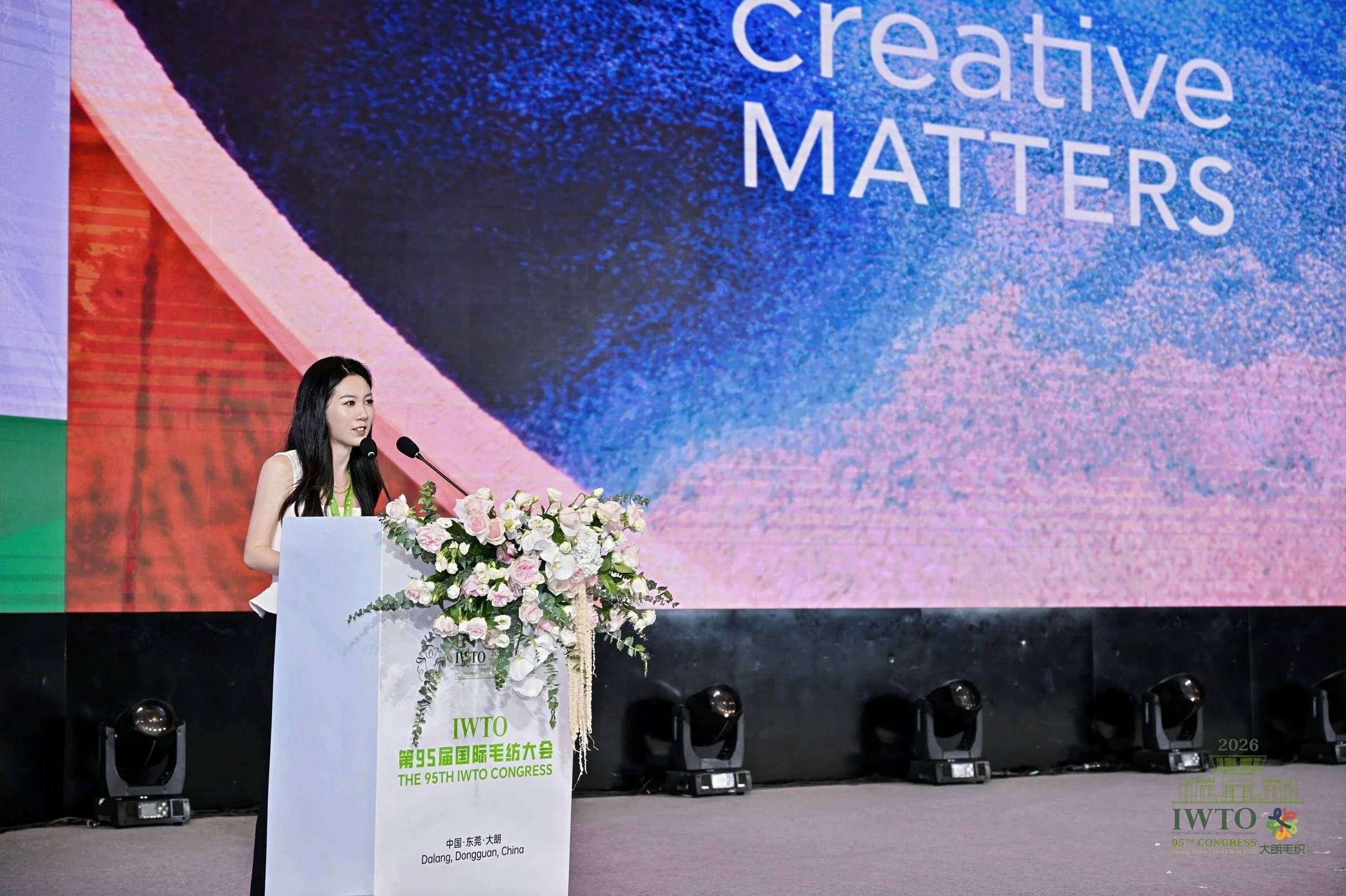
Mengting Shen, Senior Designer and Project Manager
This month, Creative Matters Senior Designer and Project Manager Mengting Shen had the opportunity to speak at the International Wool Textile Organisation (IWTO) conference, taking place in the major industrial and manufacturing town of Dalang, in the Guangdong province, China. This conference was joining conversations taking place across the global wool industry about the future of natural fibres.
While our presentation last year focused on wool in commercial and cruise environments, this year's discussion turned toward luxury residential, hospitality and retail interiors. Across these sectors, we are seeing a quiet but substantial change in how designers think about material selection. Increasingly, conversations are moving beyond appearance alone toward questions of longevity, wellness and environmental accountability. Within that shift, wool is finding renewed relevance not as a traditional material but as one uniquely suited to how we want interiors to perform today.
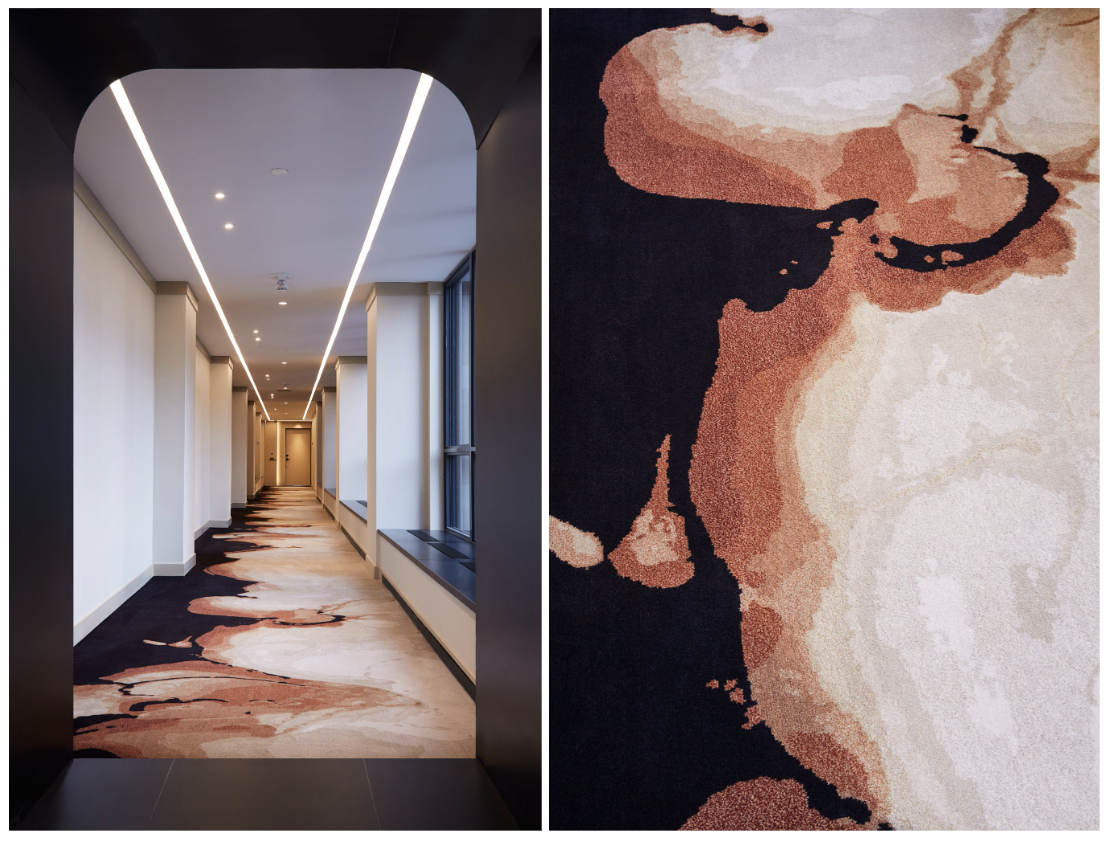
For Canada's first Canopy by Hilton in the Yorkville neighbourhood of Toronto, Creative Matters developed bespoke rugs inspired by nature, in collaboration with Studio Munge.
One of the themes we explored was the changing definition of luxury. Increasingly, the projects we work on are designed to feel calm rather than conspicuous, tactile rather than overly polished. Clients are looking for materials that create atmosphere, support well-being, and remain beautiful years after installation. Rather than designing for immediacy, designers are developing spaces intended to endure. Wool naturally supports that approach. Its comforting insulation, texture, acoustic performance, and toughness enable it to contribute to an interior in ways that extend well beyond visual appeal. Just as importantly, it develops character over time, rewarding longevity rather than resisting it.
"For a long time, commercial specifications centred on durability alone. Today, designers are considering the full lifecycle of a material—how it performs, how it feels, and what it contributes to the spaces we use every day. That's where wool continues to distinguish itself," Mengting Shen, senior designer & Project manager, Creative Matters.
This thinking has shaped projects across our portfolio. At La Samaritaine in Paris, wool allowed us to achieve complex detailing within one of the world's most celebrated retail environments while meeting the demands of constant daily traffic. At Muir Hotel in Halifax and Pendry Manhattan West in New York, it introduced warmth, softness and acoustic comfort into hospitality spaces where atmosphere is every bit as important as durability. Each project had different design objectives, yet the material remained remarkably consistent in supporting performance and experience. Recent durability testing presented by IWTO further reinforces what many designers are already seeing in practice: wool continues to perform exceptionally well, challenging long-held assumptions that synthetic reinforcement is necessary to achieve commercial-grade resilience.
"What we're seeing isn't a return to wool for tradition's sake. It's a reflection of changing priorities spanning the design industry. As clients place greater value on materials, accountability and long-term performance, wool has become an increasingly convincing choice because it delivers on all three," Ali McMurter, Managing Partner, Creative Matters.
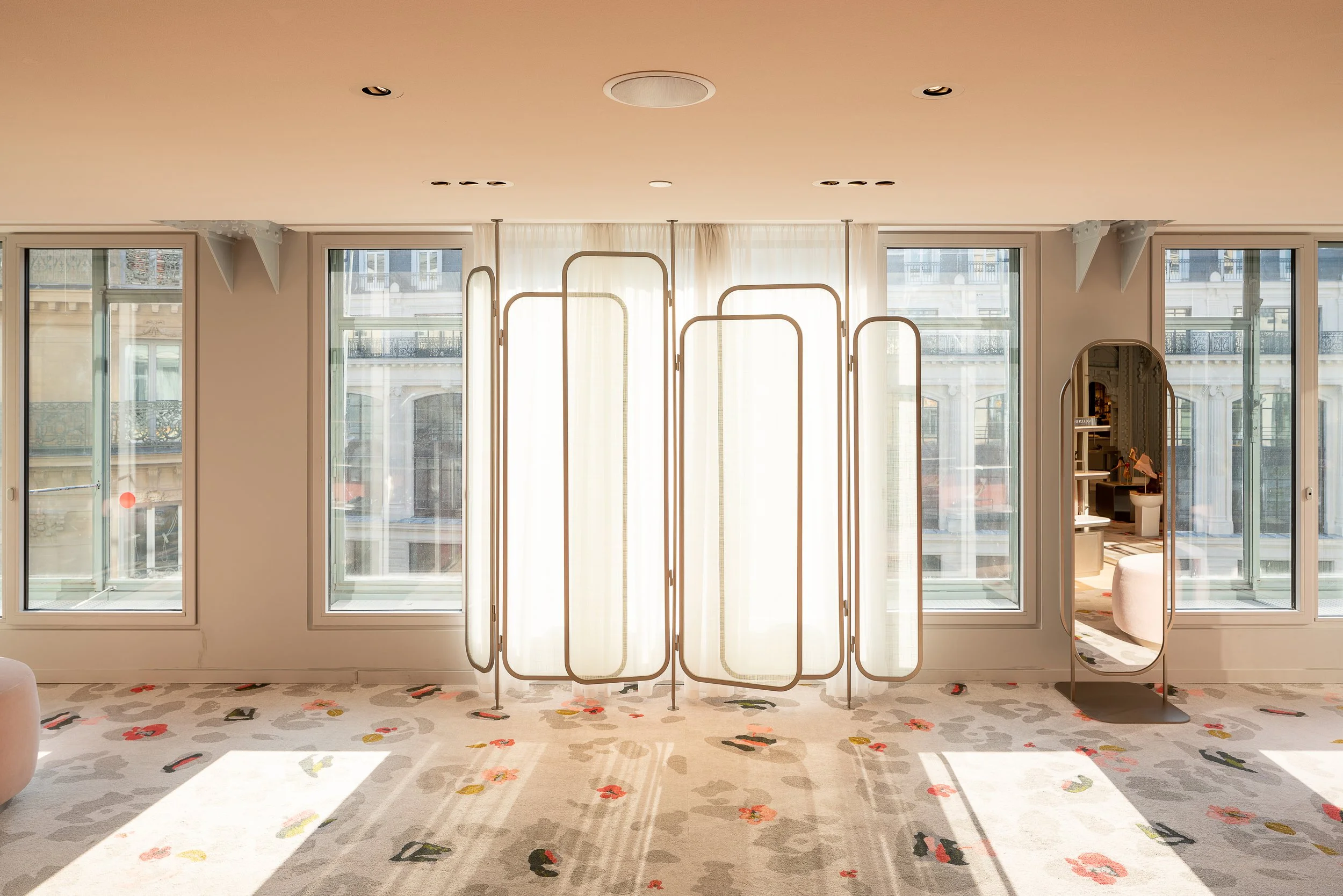
At La Samaritaine in Paris, Creative Matters designed carpets for 19 different areas in collaboration with Yabu Pushelberg.
Perhaps most importantly, wool’s use matches wider discussions taking place across the design industry. As environmental certifications become increasingly important and clients place greater - emphasis on healthier, more thoughtfully sourced materials, designers are looking for solutions that tackle multiple priorities simultaneously. Today, 77% of Creative Matters' production incorporates wool and wool blends, while nearly 62% of our projects are produced in 100% wool—a reflection of changing client expectations as much as our own devotion to natural fibres. For us, wool is no longer simply a material specification; it represents a wider movement toward interiors that privilege longevity, craftsmanship and an amplified link to the natural world.
Founded in 1930, the International Wool Textile Organisation brings together growers, manufacturers, researchers, designers and industry leaders from across the global wool supply chain to advance knowledge, establish standards and explore the future of wool. This year's conference reinforced something we continue to see in our own work: the future of interior design will be shaped as much by material choices as by aesthetics. As designers continue to prioritize wellness, responsible sourcing and longevity, we believe wool will remain at the centre of that conversation, not because it looks to the past, but because it continues to answer the needs of contemporary design.